
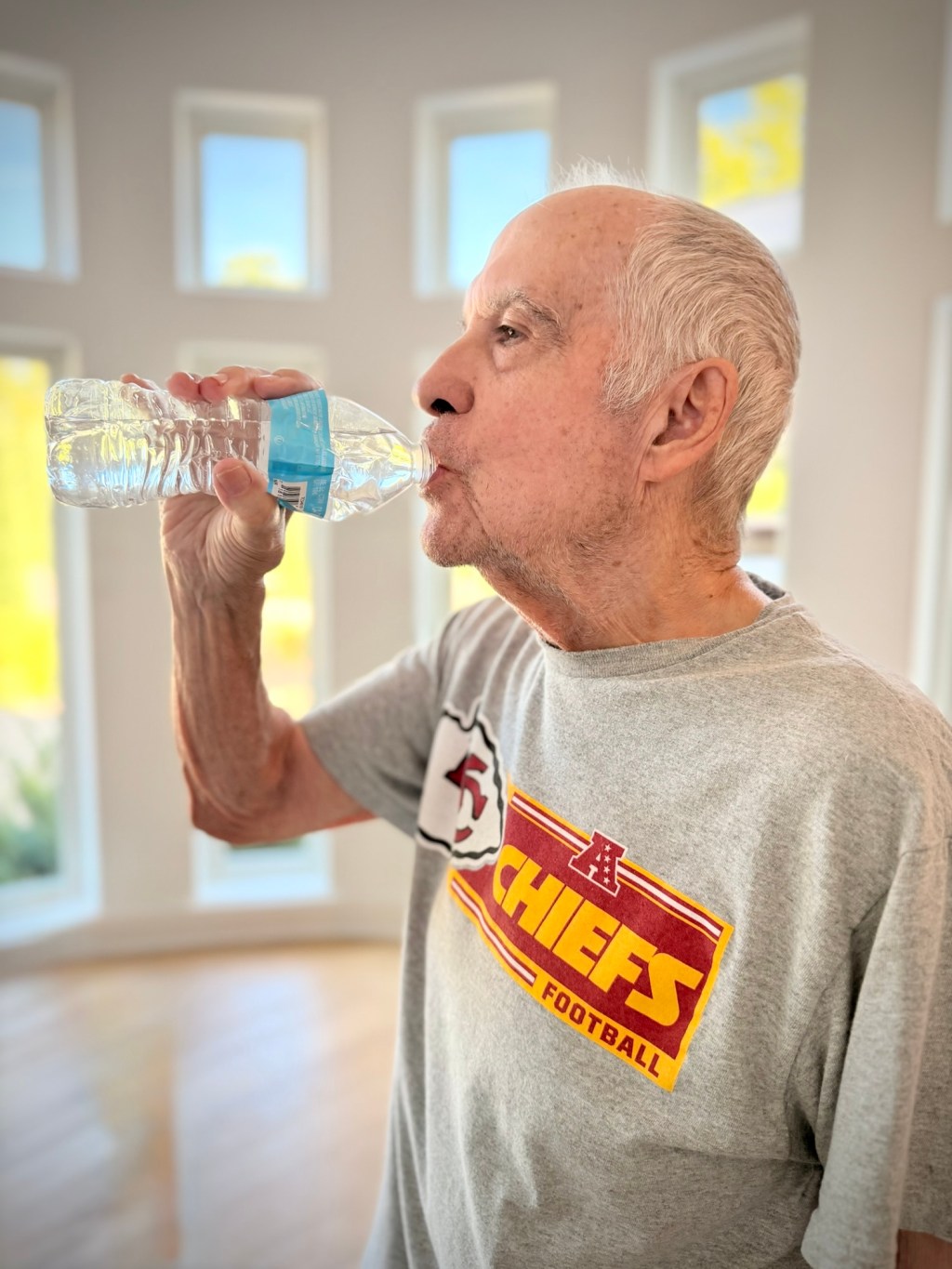
Dysphagia, or difficulty swallowing, is a generalized, historically medical term that can describe many changes, differences, and disorders to a person’s ability to move food, drink, or medication from the mouth to the stomach.
Think of swallowing as a carefully coordinated pathway. Dysphagia happens when part of that pathway isn’t working as smoothly or safely as it should.
Swallowing is something most of us do automatically, without thought of it’s ability to be compromised, but it’s actually a pretty complex process.
You have 4 phases every time you go to eat or drink: First Phase is when you prepare to eat or drink by putting the cup or utensil up to your mouth and successfully transferring it all in to your mouth. On to the Second Phase, wherein the food enters your mouth and you chew to a point that you’re ready to swallow, moving it back for not too soon and not too late Third Phase. You swallow it and hopefully it clears your throat and airway in order for the Fourth Phase to wrap it up, through the esophagus to the stomach without getting stuck or coming back up.
Send me a note, include your email and you can fill out the Telehealth Safety Questionairre to see if you or a loved one’s dysphagia can be improved via skilled Dysphagia SLP services provided over telehealth.
Fun Fact: If you say ‘dysphagia’ into your phone’s dictation microphone it likely spells it ‘dysphasia’- which is, in my experience, a retired term for difficulty speaking. Possibly pushed aside once ‘DysPHagia’ was introduced and chrrently without any current use by Speech-Language Pathologists.


Leave a comment